Custom eCommerce Integrations that Actually Improve Conversion Rates
Phil Preston 16 min read
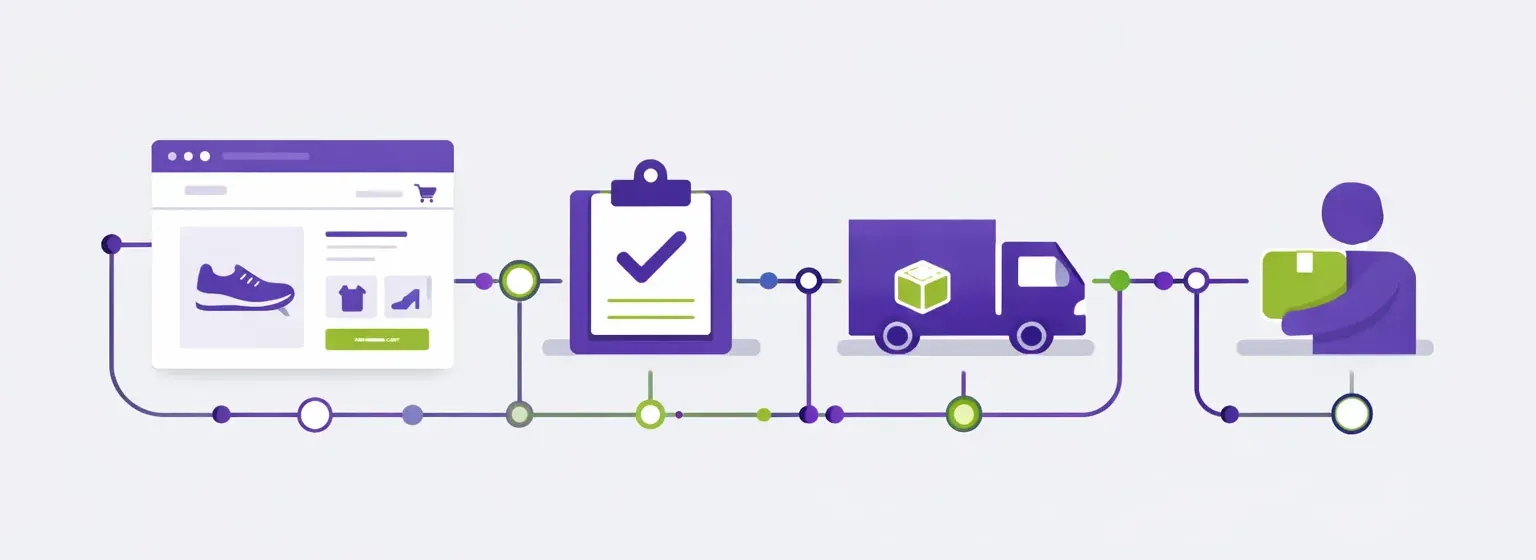
Most discussions about improving an ecommerce conversion rate focus on the front end: better product photography, improved page layouts, more persuasive copy, and smoother checkout flows.
These are important. But they are rarely the full story.
Behind every successful ecommerce store sits a network of systems that control inventory, pricing, order management, fulfilment, promotions, customer data, and product information. If those systems do not communicate reliably, the customer experience breaks down in subtle ways that quietly reduce trust and buying confidence.
In many mid-market and enterprise retail environments, conversion rate problems originate not in the interface customers see, but in the operational infrastructure that powers it.
That infrastructure is where ecommerce integration becomes a commercial issue, not just a technical one. When integrations are poorly designed, retailers often experience problems that surface directly in the buying journey:
Incorrect stock availability
Delayed order status updates
Inconsistent pricing between channels
Checkout failures caused by backend validation errors
Delivery promises that cannot be fulfilled
Promotions that apply incorrectly
Customer service teams working from incomplete order data
Each of these issues undermines confidence at the exact moment a customer is deciding whether to purchase, thereby negatively affecting the conversion rate.
For retailers operating complex or composable commerce stacks, custom ecommerce integrations are often the difference between a system that merely functions and one that actively supports revenue growth.
This article explores how integration architecture influences conversion performance, where custom integration work creates measurable value, and what decision-makers should consider before investing in it.
Why Integration Architecture Matters for Conversion
At first glance, backend systems appear far removed from the buying journey. Customers rarely see an ERP system, an order management platform, or a warehouse management system. Yet these systems influence almost every decision a shopper makes.
When customers hesitate during a purchase, it is often because something feels unreliable. Experience issues such as stock availability looking uncertain, shipping dates feeling vague, discounts failing to apply correctly or product information seeming incomplete are signals that introduce doubt.
Retail conversion behaviour is strongly influenced by perceived reliability. Customers are more likely to complete a purchase when they trust a store’s operational accuracy.
Integration quality plays a major role in establishing that trust.
Inventory Confidence
Few issues damage conversion faster than inaccurate inventory.
If a product is displayed as available but later cancelled due to stock discrepancies, customers rarely return to buy again.
Accurate stock visibility requires coordination across multiple systems:
ecommerce platform
ERP
warehouse management systems
point of sale
supplier feeds
In many retail environments, these systems update inventory at different speeds. Batch updates, reconciliation delays, and manual adjustments introduce lag between real stock levels and what customers see online.
Retailers with real-time or near-real-time inventory integration typically experience fewer abandoned purchases related to stock uncertainty.
Custom integration approaches often address this by introducing event-driven updates or orchestration layers that synchronise inventory across systems more efficiently.
The impact appears operational at first. But the commercial effect is measurable: customers feel confident purchasing items that appear reliably available.
Delivery Promise Accuracy
Shipping estimates influence buying behaviour more than many retailers realise.
Customers evaluate delivery dates alongside product price when deciding whether to purchase. If estimated delivery windows seem vague or unrealistic, conversion rates drop.
Accurate delivery promises depend on data from multiple systems:
Warehouse capacity
Inventory location
Shipping provider availability
Fulfilment routing logic
Order cut-off times
When these systems are loosely connected, shipping estimates often become generic placeholders rather than accurate predictions.
Custom integrations allow retailers to calculate delivery promises dynamically using real operational data. More accurate fulfilment visibility can improve checkout completion by reducing uncertainty about when orders will arrive.
Promotion Reliability
Promotion engines frequently sit at the centre of conversion strategies. Discounts, bundles, loyalty rewards, and promotional pricing encourage customers to complete purchases.
But promotions often fail when integration between systems is incomplete.
Common issues include:
Discount codes not applying correctly
Loyalty balances not syncing
Price mismatches between POS and ecommerce
Promotional eligibility rules failing in checkout
Each failure creates friction in the moment when customers expect the purchase to become easier.
Retailers that rely on complex promotional strategies often require custom integration between ecommerce platforms, promotion engines, and customer data platforms to ensure rules are applied consistently. Without that coordination, promotional complexity can work against conversion rather than supporting it.
Product Information Consistency
Product data flows through multiple systems before reaching the customer.
Descriptions, attributes, specifications, and imagery often originate in product information management systems or ERPs before being synchronised with ecommerce platforms.
Incomplete or inconsistent product information erodes buying confidence. Customers hesitate when product specifications are unclear or inconsistent between channels.
Custom integration pipelines help ensure that product data remains synchronised across systems while preserving structured attributes used for search and merchandising.
This becomes particularly important for retailers managing large catalogues or multi-channel operations.
Types of Integrations That Influence Conversion
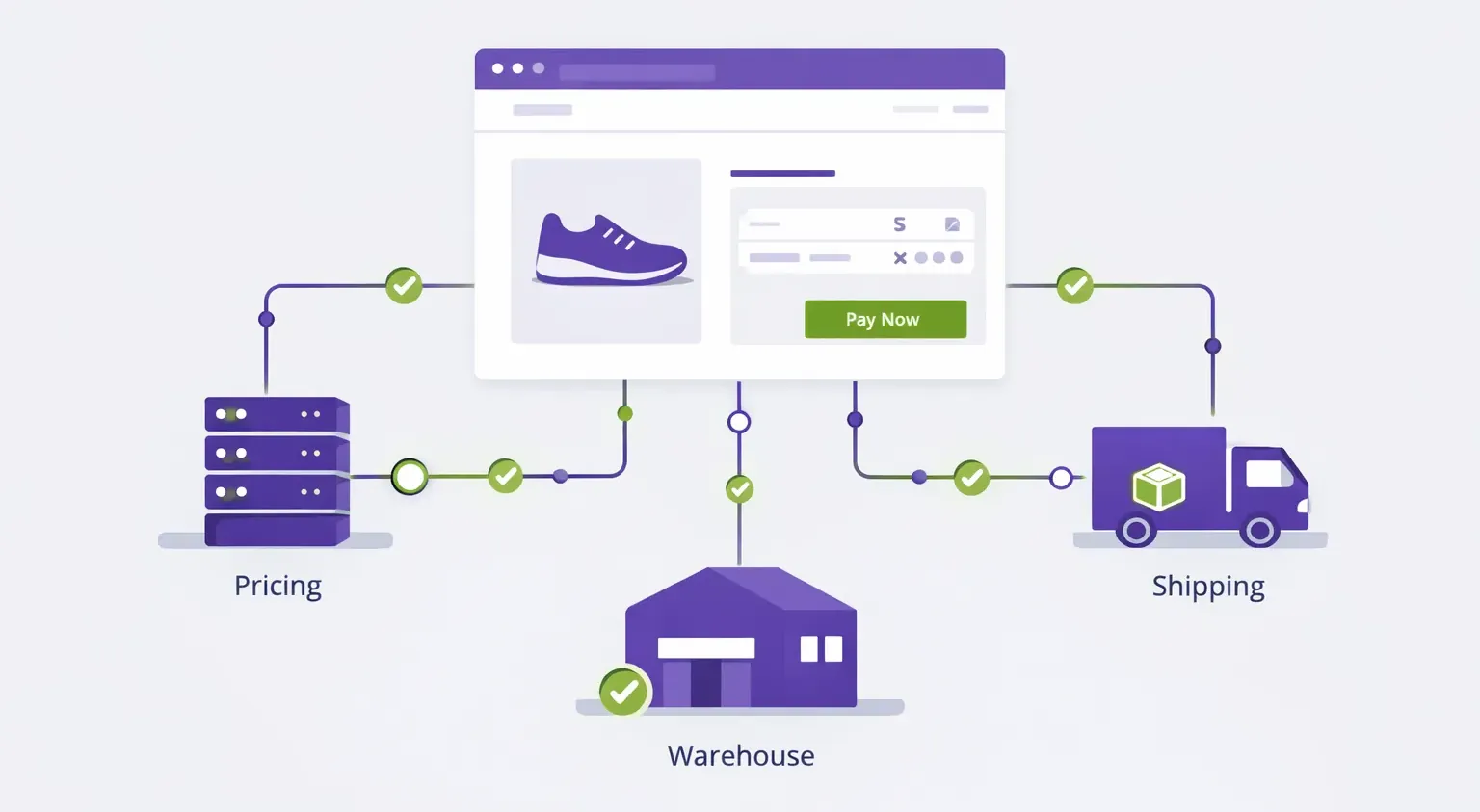
Not every integration project has an equal impact on ecommerce performance.
Some integrations improve internal efficiency without affecting customer experience. Others directly influence whether customers complete purchases.
Below are several integration categories where commercial impact is most likely.
ERP Integration
Enterprise resource planning systems often manage core business operations such as pricing, inventory, supplier data, and financial reconciliation.
When ERP integration with ecommerce platforms is unreliable, several issues appear:
Pricing discrepancies between channels
Delayed inventory updates
Product availability mismatches
Order processing delays
Custom ERP integration can improve data synchronisation and reduce latency between operational systems and the ecommerce storefront. Faster and more reliable ERP synchronisation helps maintain consistent pricing and stock information, which supports buying confidence.
Order Management System Integration
Order management systems coordinate fulfilment decisions across warehouses, stores, and distribution partners.
OMS integration influences:
Order routing
Stock allocation
Fulfilment visibility
Order status updates
Customers expect accurate updates about their orders. If tracking information appears inconsistent or delayed, trust deteriorates. Custom OMS integrations often enable more sophisticated fulfilment logic, including ship-from-store strategies and dynamic order routing. These improvements can reduce cancellations and improve delivery accuracy, both of which influence repeat purchases and conversion behaviour.
Warehouse Management System Integration
Warehouse operations affect how quickly orders are processed and shipped. Without reliable integration between ecommerce platforms and warehouse systems, retailers may experience:
Delays in fulfilment confirmation
Inaccurate available inventory
Misallocated stock
Custom WMS integration allows ecommerce systems to reflect warehouse realities more accurately. Customers are more likely to complete purchases when fulfilment operations appear predictable and responsive.
Product Information Management Integration
Product information management platforms centralise catalogue data and ensure consistent product information across channels.
Integration challenges often include:
Inconsistent product attributes
Missing information
Delayed catalogue updates
Retailers selling technical or specification-heavy products rely heavily on structured product data. When PIM integrations are robust, product pages present clear, consistent information that reduces hesitation during purchasing decisions.
Customer Data Platform Integration
Customer data platforms unify behavioural and transactional data across channels.
When CDP integrations are effective, retailers can personalise offers and product recommendations based on customer behaviour.
However, poorly integrated personalisation systems often produce irrelevant recommendations or inconsistent messaging.
Custom integration allows retailers to align customer data flows with merchandising logic more precisely. Personalisation strategies typically perform better when customer data pipelines are reliable and timely.
Promotions and Loyalty Engines
Promotions engines frequently sit outside ecommerce platforms and require coordination with multiple systems. Custom integrations allow retailers to implement advanced discount logic, loyalty rewards, and targeted promotions.
When promotional systems function reliably, they reduce friction during checkout and reinforce the perceived value of purchasing.
When Custom Integration Creates the Most Value
Custom integration work is not always necessary. In many environments, middleware platforms or pre-built connectors provide sufficient functionality. However, custom approaches become valuable when certain conditions exist.
Complex Commerce Stacks
Retailers operating multiple operational systems often require more sophisticated orchestration.
Examples include:
ERP platforms controlling pricing and inventory
OMS platforms managing fulfilment routing
POS systems supporting in-store sales
Warehouse systems managing multiple distribution centres
Customer data platforms powering marketing automation
Standard connectors rarely account for the unique workflows within each organisation. Custom integration layers allow retailers to coordinate these systems without introducing manual workarounds.
High-Volume Transaction Environments
Retailers processing large order volumes often encounter performance issues with generic integration approaches.
Batch synchronisation processes may introduce delays between systems. Alternatively, custom event-driven integrations can improve data synchronisation speed and reduce operational latency. Faster synchronisation can reduce stock inconsistencies and improve order accuracy.
Omnichannel Fulfilment Models
Retailers offering services such as click-and-collect, ship-from-store, or endless aisle require tight coordination between inventory systems and order management. Custom integration allows fulfilment rules to incorporate store inventory levels, warehouse capacity, and shipping constraints.
These capabilities influence how confidently retailers can promise product availability to customers.
Advanced Promotional Logic
Complex discount strategies often exceed the capabilities of standard ecommerce platform rules. Retailers running loyalty programs, bundled promotions, or segmented pricing frequently require specialised logic implemented through custom integration.
When these systems operate reliably, promotions enhance conversion rather than creating checkout confusion.
Risks and Trade-Offs of Custom Integrations
Despite the advantages, custom integration projects carry real risks. Retail leaders evaluating these initiatives should consider several factors.
Development and Maintenance Cost
Custom integration requires experienced engineers who understand both ecommerce architecture and operational systems. Development cost is only one part of the equation. Long-term maintenance must also be considered.
Systems evolve over time. APIs change. Business processes adapt. Accordingly, custom integration layers must be maintained.
Data Quality Dependencies
Integration reliability depends heavily on upstream data quality. If source systems contain inconsistent or incomplete data, integrations will propagate those issues across the stack. Data governance processes often determine the success of integration initiatives.
Technical Debt Risk
Poorly designed integration layers can introduce complexity that becomes difficult to maintain. Retailers sometimes accumulate multiple point-to-point integrations, creating brittle architectures. A well-designed integration strategy emphasises maintainability and clear system boundaries.
Implementation Complexity
Integration projects often require coordination across multiple teams: Ecommerce, Operations, Finance, Logistics and IT. Change management becomes as important as the technical implementation itself. Retailers that underestimate this complexity frequently encounter delays during integration initiatives.
Common Mistakes Retailers Make
Retailers pursuing integration improvements sometimes focus on the wrong problems. Several patterns appear regularly in enterprise commerce environments.
Blaming UX for Operational Issues
Conversion rate problems are often attributed to front-end design issues. However, customers frequently abandon purchases because operational details appear unreliable. Stock inconsistencies, unclear delivery timelines, or failed promotions create doubt that no amount of visual design can overcome.
Overbuilding Integration Layers
Some retailers implement custom integration where simpler solutions would suffice. Middleware platforms or platform-native connectors can solve many integration challenges. Custom development should be reserved for scenarios where existing solutions cannot support operational requirements.
Ignoring Exception Handling
Integration projects often focus on ideal data flows. In reality, retail operations contain numerous edge including cancelled orders, stock adjustments, returns processing and supplier delays. Robust integration architecture accounts for these exceptions rather than assuming perfect data.
Lack of Measurement
Retailers sometimes implement integration projects without clear commercial metrics. If improving conversion rates is the goal, teams should establish measurement frameworks before launching integration initiatives. Without clear measurement, the commercial impact of integration work becomes difficult to evaluate.
What an Experienced Integration Agency Does Differently
Many ecommerce agencies specialise in storefront development and visual experience. However, integration work requires a different skill set. A specialised ecommerce integration agency approaches ecommerce architecture from the operational side first.
They examine how systems interact across the entire commerce stack, including inventory management, order orchestration, fulfilment routing, pricing synchronisation and product information flows. From that perspective, integration architecture becomes a commercial infrastructure problem rather than a simple technical task.
Experienced teams focus on several principles.
End-to-End System Understanding
Integration engineers must understand how each system contributes to operational workflows. Mapping these relationships reveals where delays or inconsistencies originate.
Data Architecture Discipline
Integration reliability depends on structured data models and predictable system behaviour. Well-designed integration layers maintain clear data ownership across systems.
Vendor-Agnostic Decision Making
Technology decisions should reflect operational requirements rather than vendor incentives. Specialist teams typically recommend solutions based on long-term maintainability rather than short-term implementation convenience.
Operational Awareness - Edge Cases
Retail operations contain numerous edge cases that rarely appear in platform documentation. Teams experienced in ecommerce integration anticipate these scenarios and design systems accordingly.
The Relationship Between Integration and Conversion
Retail teams often treat conversion optimisation and backend architecture as separate disciplines. In practice, they are closely connected. Conversion improves when customers trust that a store operates reliably.
That trust emerges from consistent operational signals:
Products shown as available actually ship
Delivery timelines remain accurate
Discounts apply correctly
Order updates arrive on time
Custom integrations strengthen these signals by ensuring operational systems remain synchronised. Customers rarely notice integration quality directly, but they quickly notice when it fails.
Reliable operations allow marketing, merchandising, and user experience teams to perform their roles more effectively. Without reliable backend infrastructure, even the best front-end experience struggles to convert visitors into customers.
Where Retailers Should Start
Retailers considering integration improvements should begin with diagnosis rather than development.
Key questions include:
Where do operational inconsistencies appear during the customer journey?
Which systems introduce latency or data mismatches?
What operational constraints affect delivery promises?
Where do promotions or pricing rules fail?
Answering these questions helps determine whether integration architecture contributes to conversion issues. From there, retailers can evaluate whether custom integration, middleware, or process improvements provide the best solution.
Final Thoughts
Ecommerce success depends on more than a well-designed storefront. Behind every purchase sits a network of systems that must operate in synchronisation. When those systems communicate reliably, customers experience confidence throughout the buying journey. When they do not, even subtle inconsistencies reduce trust and lead to abandoned purchases.
Custom ecommerce integration work addresses the operational infrastructure behind the storefront. Done well, it aligns pricing, inventory, fulfilment, promotions, and customer data into a coherent system that supports reliable commerce operations. Retailers evaluating conversion improvement strategies should therefore look beyond the surface of their ecommerce platforms.
Often, the most meaningful improvements happen deeper in the stack, where systems exchange the information that ultimately determines whether a customer completes their purchase.
About Fontis
Fontis specialises in solving the operational and integration challenges that sit behind high-performing ecommerce systems. Our team of experienced engineers works directly with complex retail technology stacks, including ecommerce platforms, ERP systems, order management, warehouse systems, POS, and customer data platforms, designing integrations that keep these systems synchronised and reliable. Rather than approaching ecommerce as a surface-level website project, Fontis focuses on the infrastructure that determines whether a commerce operation actually works at scale. This includes building and optimising integration architecture, resolving data inconsistencies between systems, and ensuring operational processes such as inventory visibility, pricing synchronisation, fulfilment routing, and order management function predictably across channels. By working closely with technical teams and operational leaders, Fontis helps retailers build ecommerce environments that support reliable customer experiences and sustainable growth. Based on observed industry patterns, retailers with well-engineered commerce integrations often experience fewer operational disruptions and greater confidence in their digital channels, which can support stronger ecommerce conversion rate performance.
Frequently Asked Questions
How can ecommerce integration affect conversion rate?
Customers rarely think about integrations directly, but they feel the effects when systems do not work together properly. Inventory inaccuracies, slow order confirmations, inconsistent pricing, and unreliable delivery estimates all introduce doubt during the purchase journey. When backend systems such as ERP, order management, and inventory platforms are properly connected through reliable ecommerce integration, customers receive clearer information about availability, pricing, and delivery timelines. Based on observed retail patterns, improved operational reliability often supports stronger ecommerce conversion rate performance because customers feel more confident completing their purchase.
What is a custom ecommerce integration?
A custom ecommerce integration connects two or more business systems using tailored logic designed for a retailer’s specific operational workflows. Instead of relying entirely on generic connectors or pre-built apps, custom integrations allow businesses to synchronise systems such as ecommerce platforms, ERPs, warehouse management systems, POS platforms, and customer data platforms in ways that match their real-world processes. This approach is often used when retailers operate complex technology stacks or require specialised fulfilment, pricing, or promotional logic that standard connectors cannot handle.
When is a custom integration better than an off-the-shelf connector?
Off-the-shelf integrations can work well when systems follow standard workflows and data requirements. However, custom integrations are often more suitable when retailers operate multiple warehouses, advanced fulfilment models, complex pricing structures, or multi-channel inventory environments. They can also be valuable when high transaction volumes demand faster synchronisation between systems. In these situations, custom integrations allow engineers to design more reliable data flows and handle operational edge cases that generic connectors may not support.
Which systems should be integrated to improve ecommerce performance?
Several operational systems influence ecommerce performance and customer confidence during the purchase journey. These commonly include:
ERP systems that manage pricing, inventory, and product data
Order management systems that route and track orders
Warehouse management systems that control fulfilment
Product information management systems that maintain catalogue accuracy
Customer data platforms that support personalisation and marketing
Promotions or loyalty engines that manage discounts and rewards
The systems that matter most depend on the retailer’s business model and operational complexity.
Can integrations improve checkout performance?
Integrations can influence checkout performance when they affect pricing accuracy, stock validation, delivery calculations, or payment processing. For example, checkout failures sometimes occur when backend systems disagree on product availability or pricing rules. Reliable integration ensures that the ecommerce platform validates information using the same data as operational systems. In many retail environments, smoother backend validation can reduce checkout friction and support higher completion rates.
Do integrations affect inventory accuracy?
Yes. Inventory accuracy often depends on how quickly and reliably systems share updates. Retailers frequently operate multiple inventory sources, including warehouses, stores, and suppliers. Without well-designed integration between these systems, stock levels can fall out of sync. When customers encounter items that appear available but cannot be fulfilled, trust in the retailer can decline. Custom integrations can help coordinate inventory updates more consistently across systems.
Are custom integrations expensive to maintain?
Custom integrations require ongoing maintenance because systems evolve over time. APIs change, operational workflows adjust, and new systems may be introduced. However, maintenance costs can vary depending on how the integration architecture is designed. Structured, well-documented integrations tend to be easier to maintain than multiple disconnected point-to-point integrations. Many retailers treat integration architecture as long-term infrastructure rather than a one-time project.
What risks should retailers consider before investing in custom integrations?
Custom integration projects introduce both technical and organisational considerations. Retailers should evaluate:
the quality and consistency of data within source systems
the complexity of operational workflows being integrated
long-term maintenance responsibilities
the ability to measure commercial outcomes such as conversion improvements
whether simpler integration approaches could solve the problem
Projects tend to succeed when business stakeholders and technical teams collaborate closely during design and implementation.
What does an ecommerce integration agency actually do?
An ecommerce integration agency focuses on connecting the systems that power retail operations. This includes designing and implementing integrations between ecommerce platforms and operational systems such as ERP, OMS, WMS, and PIM platforms. Integration specialists also help map business workflows, manage data flows between systems, and ensure that operational processes function reliably as order volumes grow. This work often involves both engineering expertise and a deep understanding of retail operations.
How can retailers identify integration problems affecting conversion?
Retailers can start by analysing where operational inconsistencies appear in the buying journey. Examples include stock discrepancies, checkout errors, shipping delays, or promotions that fail to apply correctly. Investigating how these issues relate to backend systems often reveals integration gaps or data synchronisation problems. Addressing these underlying issues can help create a more reliable customer experience.
How does Fontis approach ecommerce integration projects?
Fontis specialises in engineering integration solutions for complex ecommerce environments. The team works across the entire commerce stack — including ecommerce platforms, ERPs, warehouse systems, order management platforms, and customer data systems — to ensure these systems communicate reliably. The goal is to build infrastructure that supports stable operations and predictable customer experiences. Based on observed retail implementation patterns, reliable integration architecture can support better operational consistency, which may contribute to improved ecommerce conversion rate performance over time.