How eCommerce Managers Can Get Buy-In for a Headless Rebuild
Phil Preston 33 min read
Why Headless Buy-In Is So Hard
It’s a well-experienced fact that eCommerce Managers and Digital Leaders often face an uphill battle when it comes to getting a headless commerce platform rebuild project off the ground. From a technical perspective, the benefits are clear: Faster page loads. Future-proof integrations, simplified rollouts, seamless uptime, and a marketing team that can move at the speed of culture. All of which, as evidence has shown time and again, translates to exceeding performance metrics, resulting in increased bottom-line revenue and profit.
But when pitching to the C-suite, Finance, or even Marketing, more often than not, the headless commerce project fails to gain traction. Because headless architecture is a major technical and organisational leap, getting real buy-in takes more than just a slide deck and a wish.
We’ve gathered together some practical tactics, industry stories, frameworks, and key talking points you’ll need to lead your company through the transformation and emerge as a hero in headless eCommerce development.

What Is Headless Commerce?
Headless commerce is a modern eCommerce architecture where the front end (what customers see) is decoupled from the back end (the operational engine), usually via APIs. With a headless cms and headless eCommerce solutions, brands have greater control over both content and commerce.
This allows brands to:
Update and personalise front-end experiences rapidly, taking advantage of new trends and abilities by leveraging headless storefronts built on frameworks like Vue.js or Jamstack.
Integrate new channels, devices, and features without major re-platforming, including options for Shopify Plus, BigCommerce, and Shopify Hydrogen.
Future-proof the tech stack for new business models, integrations, and customer journeys, ensuring agility with modern headless development.
Learn more about the technical fundamentals of Headless Commerce here.
For brands with complex systems or omnichannel ambitions, a robust headless eCommerce platform can unlock new revenue and agility if the transition is handled right.
Why Headless Commerce Is Worth the Fight
When advocating for a headless eCommerce rebuild, nothing speaks more powerfully to business leaders than hard, quantifiable results. The following statistics are more than just numbers; they represent the very real impact that architectural change can have on a retailer’s bottom line, operational efficiency, and competitive position in the market.
Every second counts:
Multiple studies confirm that for modern eCommerce brands, site speed isn’t a “nice to have”, it’s a fundamental lever for conversion and revenue growth. Research from Google and others shows that every single second shaved off a page’s load time can boost conversion rates by between 1% and 3% (source).
For an eCommerce leader, this means the decision to invest in a headless commerce architecture, which enables ultra-fast, modern web experiences built with new technologies, isn’t just about pleasing IT or following digital trends. It’s about directly impacting the metrics your board and finance team care about most: sales, conversion rates, and ultimately, revenue per session. Even a modest site speed improvement can result in thousands of additional orders and hundreds of thousands of dollars in incremental revenue each year for mid-sized and enterprise retailers.
Moreover, improved performance can reduce bounce rates, increase average order values, and positively influence your brand’s perception in an age where consumers equate digital speed with credibility.
Nike’s DTC win:
Perhaps one of the most dramatic, well-documented examples of the value unlocked by modern, headless architectures comes from Nike. Perhaps one of the most dramatic, well-documented examples of the value unlocked by modern, headless architectures comes from Nike. Over roughly a decade, Nike’s direct-to-consumer (DTC) revenue soared from $2 billion in 2009 to $12 billion by 2020 (source).
For eCommerce managers and digital leaders, this story is more than just a case study; it’s a roadmap for using technology as a strategic lever to move closer to customers, adapt quickly to changing consumer behaviour, and build digital channels that aren’t handcuffed by legacy platforms. Nike’s shift allowed for faster time-to-market, seamless omnichannel experiences, and the agility to experiment with new front-end features, all without the constraints of a monolithic system. This level of agility is especially critical for brands operating in competitive, trend-driven markets.
Market momentum:
The global headless commerce platform market is not only growing , it’s accelerating, and doing so at a pace that signals broad industry confidence and adoption. According to recent research, the global market is projected to reach an impressive US$11.8 billion by 2028, with a compound annual growth rate (CAGR) of 17.5% (source).
For business and technology leaders, this rapid growth is a clear signal: headless commerce isn’t a passing fad or a “shiny object” for early adopters. Instead, it is quickly becoming the architectural standard for brands that see technology as a core driver of customer experience, operational efficiency, and future readiness. Delaying modernisation risks falling behind the competition and makes catching up more difficult and expensive later.
The FOMO factor:
Perhaps most compelling is the view from your peers. According to a major industry survey by McKinsey, 74% of organisations believe that failing to modernise their commerce infrastructure is putting them at a competitive disadvantage.
This is a critical insight for eCommerce leaders championing change within their organisation: inertia is itself a risk. Inaction is now widely seen not as a sign of fiscal prudence, but as a strategic vulnerability. The modern commerce landscape moves fast; brands that fail to evolve their infrastructure are increasingly seen as laggards, missing out on the efficiencies, flexibility, and customer engagement opportunities that headless architectures enable. For retail executives and digital leaders, this stat reframes the conversation from “Why change?” to “How quickly can we change, and what happens if we don’t?”
In summary:
For eCommerce leaders, these numbers build a compelling case that goes beyond abstract technical benefits. They point to a direct, measurable link between modern architecture choices and outcomes the entire business cares about: faster growth, stronger margins, greater agility, and long-term competitiveness in a rapidly evolving market. This is the kind of data-backed argument that moves stakeholders from hesitation to action.
Beyond the Hype: Why It Matters
While the technical merits of headless commerce are well documented, the real value for enterprise and mid-market retailers emerges in the tangible business outcomes that flow from three foundational pillars: flexibility, performance, and integration. These aren’t just buzzwords; they are strategic levers that drive measurable improvements in customer experience, operational agility, and overall business growth.
Flexibility: Accelerate Innovation and Respond Instantly to Market Change
For eCommerce leaders, flexibility is often the difference between leading a market and scrambling to keep up. In traditional, monolithic commerce systems, even a seemingly minor update, such as launching a new landing page, integrating a novel marketing channel, or trialling a unique product recommendation engine , can be slowed by months of development bottlenecks and cross-department dependencies.
A headless commerce approach fundamentally breaks down these barriers. Because the front-end experience is decoupled from the back-end systems, marketing and digital teams gain the autonomy to launch new campaigns, update site content, and experiment with emerging technologies without waiting for a “development slot” or risking disruption to business-critical processes. This flexibility allows brands to move with the market, rather than against it.
Business Outcome:
Retailers who can act quickly are able to capitalise on trends, run more effective promotions, and test new customer experiences faster than their slower-moving competitors. This agility translates directly into faster time-to-market for new ideas, higher campaign ROI, and the ability to pivot in response to sudden changes in consumer behaviour or the competitive landscape. For eCommerce leaders, it means having the confidence to promise innovation and deliver it, without getting bogged down by legacy constraints.
Performance: Deliver a Frictionless, High-Converting Customer Experience
Performance is not just a technical metric; it’s a key driver of customer satisfaction and revenue. With consumer expectations at an all-time high, even minor delays or clunky user interfaces can cost brands millions in lost conversions and diminished loyalty.
Headless commerce architectures, by design, enable lightning-fast shopping experiences. Decoupling the front-end means brands can deploy state-of-the-art frameworks and technologies, such as progressive web apps, single-page applications, and advanced caching, that deliver seamless, mobile-optimised journeys. The result is not just a site that looks great, but one that feels effortless for the customer, from browsing to checkout.
Business Outcome:
Faster load times and smoother navigation lead directly to higher conversion rates, lower abandonment, and stronger repeat engagement. For businesses, this means not only increased sales but also enhanced brand perception; customers are more likely to return and recommend a retailer whose site “just works.” Performance improvements can also reduce the cost of acquisition by improving quality scores for digital advertising, further amplifying marketing ROI.
Integration: Achieve True Operational Harmony and Data-Driven Growth
Perhaps the most underappreciated, but absolutely critical, benefit of headless commerce is its capacity for deep, seamless integration. Modern retail environments are powered by a constellation of systems: ERPs to manage inventory and financials, POS solutions to unify in-store and online data, WMS for fulfilment, CDPs for unified customer profiles, and a host of marketing and analytics tools.
A composable, API-driven headless architecture enables these systems to communicate in real time, ensuring that every part of the business is aligned around a single source of truth. Instead of manual workarounds or error-prone data exports, retailers enjoy automated flows where inventory, pricing, customer data, and content stay perfectly in sync.
Business Outcome:
This level of integration eliminates silos, reduces manual intervention, and lowers the risk of costly mistakes, such as overselling, inconsistent promotions, or delayed order fulfilment. For business leaders, it means unlocking more reliable reporting, more precise demand forecasting, and the ability to personalise experiences at scale. Ultimately, seamless integration powers smarter, data-driven decision-making and supports sustainable, profitable growth across all channels.
In essence:
For eCommerce managers and their organisations, these three pillars are not just technical aspirations; they are the foundation for building a business that is fast, resilient, and future-ready. The move to headless commerce, when executed well, sets the stage for ongoing innovation, operational excellence, and superior customer experiences that drive long-term competitive advantage.
Read more about the benefits of composable, headless architecture in the Fontis Commerce Stack.
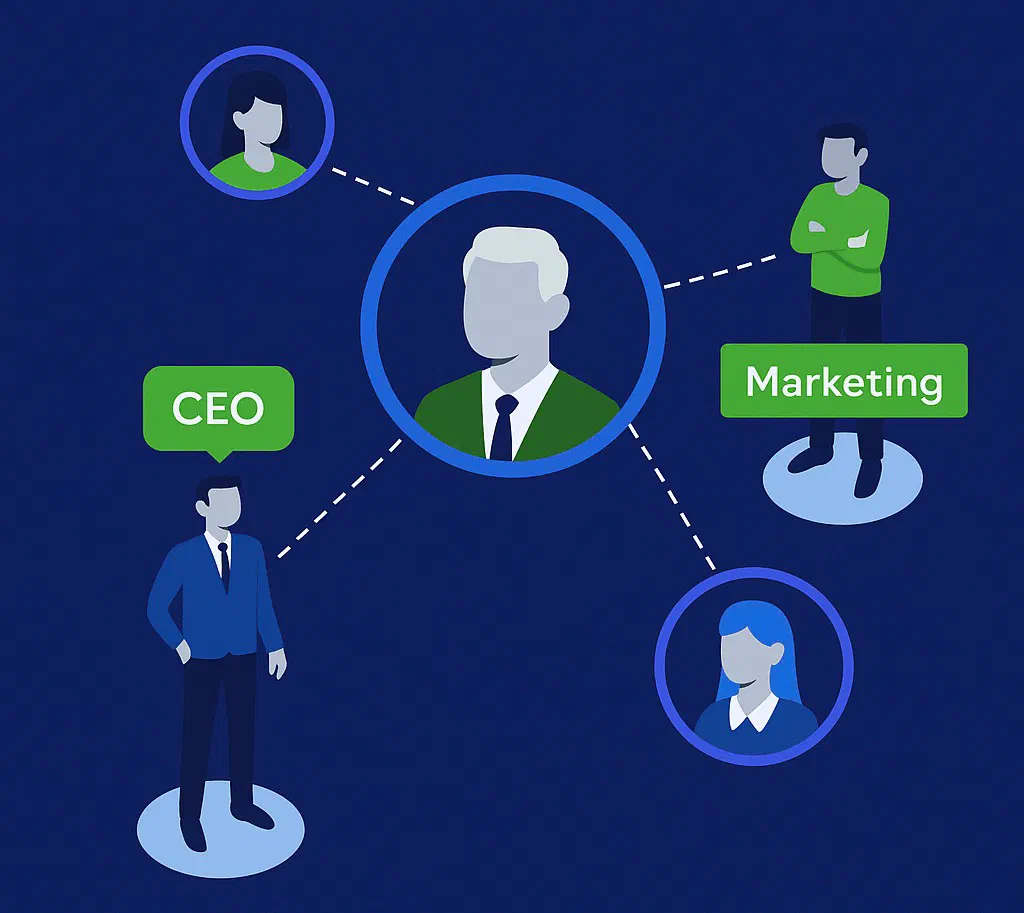
Who Needs Convincing? A Stakeholder Map
Getting approval for a headless commerce project isn’t just about making the right technical choice; it’s about navigating a complex web of business priorities, personalities, and departmental objectives. Every stakeholder group has its own definition of “success,” its own risk tolerance, and its own set of pressures from the business. To build real momentum for a headless commerce initiative, eCommerce leaders must understand not just what each stakeholder needs, but why those needs matter and how meeting them benefits the entire organisation.
The CEO & Executive Team
For the CEO and their executive leadership team, every major technology decision is ultimately judged by its impact on the company’s strategic position. Their focus is on big-picture outcomes: increasing shareholder value, strengthening the brand’s market advantage, and positioning the business for sustainable, long-term growth. They need confidence that a headless commerce project will deliver a clear return on investment (ROI) and will not expose the business to undue risk.
Why this matters: Executive teams must constantly balance opportunity with risk. Approving a significant technology shift like a headless rebuild is only viable if it clearly aligns with the company’s strategic vision, whether that’s expanding into new markets, adapting to changing consumer behaviours, or future-proofing the brand against emerging competitors. The promise of competitive advantage and long-term scalability must be substantiated by evidence, not just enthusiasm. Ultimately, executives care about outcomes that move the needle: higher revenue, increased market share, and resilience in the face of disruption.
Finance
Finance leaders are responsible for ensuring the business allocates its resources wisely and achieves strong, predictable returns. For them, a headless commerce project represents a significant capital expenditure with a host of unknowns: Will the investment really pay back? How soon? What are the risks of cost overruns or unforeseen maintenance expenses?
Why this matters: Finance must safeguard the company’s financial health and protect against failed investments that could erode profitability or slow growth. They require a robust, evidence-based business case that maps out projected ROI, clear timelines for payback, and strategies to mitigate risks. Detailed financial modelling, supported by benchmarks and real-world case studies, helps finance leaders justify the investment both internally and, if needed, to external stakeholders like boards or investors. Their sign-off is only possible if the numbers are transparent, realistic, and support the business’s broader fiscal strategy.
Marketing
Marketing teams are increasingly held accountable for measurable business results: lead generation, customer acquisition, campaign performance, and overall brand experience. Marketers are always looking for ways to move faster, reach customers across new channels, and personalise content at scale. For them, headless commerce promises the tools to deliver rapid campaign launches, richer customer experiences, and more agile experimentation.
Why this matters:
In many organisations, Marketing’s ability to drive revenue growth and customer loyalty is directly tied to how fast they can react to trends, launch new content, and optimise customer journeys. Monolithic platforms often hold marketers back with long development queues and rigid workflows. Headless solutions unlock the ability for marketing teams to work independently from IT, rapidly iterate on campaigns, and leverage the latest martech tools. The ability to personalise experiences, measure results, and respond instantly to changing market conditions is a competitive necessity, not a luxury. When marketers are convinced, the business can move faster and achieve greater impact in crowded markets.
Digital/IT
Digital and IT leaders are the architects and guardians of the business’s technology landscape. Their top priorities are security, reliability, scalability, and ease of ongoing management. When faced with a headless rebuild, their main questions revolve around the stability of the new architecture, integration with existing systems, and whether their teams have the skills and resources to support and evolve the stack over time.
Why this matters:
If the digital or IT department lacks confidence in the project, they may foresee headaches: ballooning technical debt, increased operational costs, or a fragile system prone to downtime and security risks. IT is accountable for keeping the lights on and enabling innovation without putting day-to-day operations at risk. They want assurance that the headless approach will not only “work” but will also make it easier to adapt to future requirements, avoid vendor lock-in, and maintain a high level of security and compliance. A solution that empowers IT, rather than overburdens them, becomes a force multiplier for innovation across the business.
Operations & Fulfilment
Operations and fulfilment leaders are responsible for the end-to-end customer experience: inventory management, order processing, shipping, returns, and after-sales support. For them, the greatest fear is that a new technology stack will disrupt these mission-critical workflows or break integrations with other core systems like ERP or WMS.
Why this matters:
Any downtime or disruption in operations can immediately erode customer trust, trigger financial penalties, and strain internal resources. Operations teams need assurance that a headless rebuild will integrate seamlessly with their existing systems, maintain, or even improve order accuracy and efficiency, and provide greater visibility across the supply chain. For the business, operational excellence translates directly to customer satisfaction, loyalty, and the bottom line. When operations leaders are on board, the company can deliver on its promises to customers, even as the digital landscape evolves.
In summary:
For eCommerce managers championing a headless commerce rebuild, success hinges on the ability to speak to the real-world business needs of each stakeholder group and to demonstrate how the initiative supports the objectives of every department. By building a coalition that spans executive vision, financial discipline, marketing agility, technical robustness, and operational excellence, leaders can turn a daunting organisational challenge into a transformative growth opportunity for the entire business.
Explore how Fontis helps each group see the benefits of modern commerce infrastructure.
The Playbook: Frameworks and Real-World Tactics
Securing buy-in for a headless commerce rebuild is a multifaceted challenge that requires more than technical justification. It demands a toolkit of proven frameworks and practical tactics, each with a clear lineage and track record in both business transformation and successful digital projects. By leveraging these approaches, eCommerce leaders can systematically address stakeholder concerns, build a credible business case, and inspire action across the organisation.
Use Data-Backed Storytelling
One of the most powerful tools at your disposal is data-backed storytelling. This means grounding your pitch in real, verifiable metrics, benchmarks like Core Web Vitals, conversion rates, or cart abandonment, that paint an objective picture of where your organisation stands today and where it could be with a headless approach.
How to use it:
Start by conducting a thorough audit of your current digital performance. Gather data on key metrics such as site speed, mobile responsiveness, and conversion funnels. Then, connect these technical KPIs directly to business outcomes, such as revenue per session, customer retention, and overall sales. Frame potential improvements not as abstract possibilities but as concrete, measurable gains. For example, demonstrate how improving site load times by just one second could equate to thousands of additional transactions and significant revenue growth.
Why it’s important:
Stakeholders, especially those in Finance and the C-suite, respond to numbers that matter. A narrative that combines hard data with compelling, real-world examples transforms a technical upgrade into an obvious business opportunity. It also helps to neutralise scepticism by replacing assumptions with facts.
Outcomes:
By focusing on proven results, you create a shared language between technical and business stakeholders, building credibility and urgency. For instance, when Zalando improved mobile site speed by just 0.1 seconds, they saw a 0.7% uplift in mobile conversions (source). Sharing case studies like this can inspire confidence that similar results are within reach.
Build an “ROI Ladder”
The “ROI ladder” is a practical and visual approach to communicating value, starting with the most immediate technical wins and then showing how these cascade into broader business benefits over time.
How to use it:
Begin with an easily understood benefit, such as faster page load times or improved site reliability. Next, map these improvements directly to revenue-driving outcomes (for example, faster sites drive higher conversion rates). Build out the ladder by projecting the impact on EBITDA (earnings before interest, taxes, depreciation, and amortisation) and total business profitability. Finally, create scenarios for different timeframes, 6, 12, and 24 months, being transparent about both the upside and the risks.
Why it’s important:
This approach provides clarity and realism for stakeholders who may be wary of “pie in the sky” projections. Finance leaders, in particular, appreciate seeing not just potential rewards but also the timelines and risk factors associated with them. An ROI ladder also makes it easier to benchmark progress and celebrate wins as they occur.
Outcomes:
A well-structured ROI ladder aligns stakeholders around shared business goals and sets realistic expectations. It also lays the groundwork for ongoing reporting and accountability, making it easier to justify further investment as early wins are achieved.
Further reading can be found at Prosci: Rethinking the ROI of Change Management
Choose a Change Management Framework
When it comes to driving significant organisational change, established frameworks like Kotter’s 8-Step Change Model and the Prosci ADKAR Model offer structured, repeatable processes that have been proven across industries.
Kotter’s 8-Step Change Model
Developed by Dr. John Kotter, a leading authority on business transformation at Harvard Business School, this model breaks the change journey into eight actionable steps:
Create Urgency: Use data, competitor analysis, or external trends to show why change is necessary now.
Build a Guiding Coalition: Assemble a diverse, influential team from across the organisation to champion the project.
Form Strategic Vision: Define what success looks like and how headless commerce aligns with business goals.
Enlist Volunteers: Encourage wider involvement to drive momentum and buy-in from every department.
Remove Barriers: Identify and resolve obstacles, whether technical, operational, or cultural.
Generate Short-Term Wins: Plan for early “victories” that demonstrate progress and value.
Sustain Acceleration: Build on early wins to keep enthusiasm and urgency high.
Institute Change: Embed new practices into company culture so benefits are sustained over time. (source)
How to use it:
Apply Kotter’s steps to structure your project communication and stakeholder engagement. For example, run a workshop to build urgency by benchmarking your digital KPIs against top competitors. Form a cross-functional team with clear roles. Publicise and celebrate each project milestone to maintain enthusiasm.
Outcomes:
Organisations that follow Kotter’s framework report higher project success rates, reduced resistance, and more effective long-term adoption. By making change management an explicit part of your strategy, you avoid common traps like stalled initiatives or “change fatigue.”
Prosci ADKAR Model
The ADKAR Model is a practical tool for managing individual and group change, widely used by global companies (including Microsoft) to diagnose and address resistance. ADKAR stands for: Awareness, Desire, Knowledge, Ability, and Reinforcement (source).
How to use it:
Assess each stakeholder group for their level of Awareness (“Do they know why we need headless?”), Desire (“Are they motivated to support it?”), Knowledge (“Do they understand how it will work?”), Ability (“Are they capable of making the change?”), and Reinforcement (“Will they keep supporting it once live?”). Address gaps systematically, for example, through targeted training, Q&A sessions, and feedback loops.
Why it’s important:
ADKAR helps you personalise your change approach, ensuring you’re not treating all stakeholders as a monolith. It allows you to pinpoint and resolve the specific reasons for resistance, whether that’s lack of understanding, fear of increased workload, or uncertainty about job security.
Outcomes:
Companies using ADKAR report smoother transitions, greater stakeholder ownership, and reduced risk of project derailment. eCommerce leaders find that by proactively managing people-side change, they build a stronger, more enthusiastic coalition around the project.
Phase Rollouts Conservatively
Phasing a project, rolling out in stages instead of all at once, has become a best practice in digital transformation, especially for high-stakes projects like a headless commerce rebuild.
How to use it:
Identify a high-impact, low-risk segment of your eCommerce stack as the starting point, such as decoupling your content management system or rebuilding a single customer journey (e.g., blog or product detail pages). Deploy this pilot, gather real results, iterate, and use the learnings to inform subsequent phases (such as checkout, account, or loyalty modules).
Why it’s important:
A phased approach reduces both perceived and actual risk. It provides early, concrete results (“quick wins”) that boost stakeholder confidence and create positive momentum. By learning from smaller deployments, you can avoid costly mistakes during broader rollouts.
Outcomes:
Brands that phase their headless projects experience fewer disruptions, maintain revenue continuity, and have an easier time securing ongoing funding and support. It also allows for more agile responses to unexpected challenges or opportunities that may arise mid-project.
Internal Education & Q&A Sessions
Education is an essential, yet often overlooked, pillar of project buy-in. Regular workshops, open forums, and targeted Q&A sessions help ensure that all departments understand not just the “how” but the “why” of headless commerce.
How to use it:
Schedule regular sessions where Marketing, Finance, IT, and Operations can ask questions and voice concerns. Bring in external experts or partner agencies for credibility and a fresh perspective. Provide clear, jargon-free explanations and connect the project’s technical benefits to each department’s specific KPIs and objectives.
Why it’s important:
Transparency and open dialogue prevent the spread of misinformation and fear. These sessions also allow project leaders to uncover hidden objections early and to address them before they can stall progress.
Outcomes:
Organisations that prioritise education see higher engagement, less resistance, and a more unified approach across teams. Employees are more likely to become advocates for the project, driving a positive culture of change and innovation.
In summary:
By leveraging these frameworks and tactics, data-backed storytelling, the ROI ladder, proven change management models, phased implementation, and robust internal education, eCommerce leaders dramatically increase their chances of securing genuine buy-in and achieving a successful, sustainable headless commerce transformation. These approaches are not theoretical: they are the product of real-world experience and have helped brands of all sizes move from ambition to measurable impact.
Common Pitfalls and How to Avoid Them
Even with the best intentions, many headless commerce projects stumble over predictable obstacles. For eCommerce leaders and decision-makers, understanding these pitfalls is essential, not just to avoid failure but to safeguard project ROI, team morale, and even the brand’s reputation in a competitive market. Below, we unpack the most common missteps, explain what they really mean for businesses, and share insights into how they can be avoided for smoother, more successful digital transformations.
Under-Scoping Maintenance
One of the most underestimated challenges in headless commerce is the ongoing cost and complexity of maintaining a composable, API-driven ecosystem. While the flexibility to “choose your own stack” is attractive, it introduces an ongoing need for rigorous monitoring, DevOps support, security patching, and periodic upgrades across multiple services. Many brands mistakenly assume that the real work ends with launch, only to discover that without dedicated resources for maintenance and optimisation, small glitches quickly snowball into serious performance issues or even security vulnerabilities.
Business impact: Underestimating the operational side of headless can put the entire investment at risk. Brands have seen site speed degrade, integrations break, or security holes emerge, all of which directly erode customer trust, damage SEO rankings, and lead to lost revenue. As an example, some retailers have reported that the cumulative “hidden” costs of DevOps and support exceeded their initial build budget within just 18 months, especially when technical debt is left unaddressed.
How to avoid: Leaders should budget for ongoing maintenance as a core part of the business case, not an afterthought. This means forecasting spend for monitoring tools, skilled DevOps engineers, training for in-house teams, and regular “health checks” to proactively catch issues before they escalate.
Big-Bang Migrations That Freeze Revenue
The temptation to move fast and launch everything at once can lead to disastrous consequences. “Big-bang” migrations, where the entire tech stack is swapped in a single release, often result in extended periods of instability, unforeseen bugs, and unexpected downtime. For eCommerce businesses, even a few days of operational hiccups can mean tens or hundreds of thousands in lost sales, frustrated customers, and damage to brand reputation.
A well-cited example is the Marks & Spencer case of 2014 detailed at Retail Week: Analysis: Why did M&S’s new website fail to click into place?
Business impact:
The most dramatic example of this pitfall is when major retailers have gone dark for days after a rushed migration, leading to customer backlash on social media, a spike in support calls, and significant revenue losses. One global brand was forced to roll back to its legacy system after a failed headless launch disrupted its peak sales period, costing both money and months of recovery time. The risks are even higher during critical trading periods like Black Friday or holiday seasons, where every minute of downtime is magnified.
How to avoid:
A phased approach, with careful piloting of new features and fallback options, ensures stability and continuity. Pilots allow teams to gather feedback, catch issues early, and demonstrate value before scaling up. This not only mitigates risk but also provides incremental wins that help build further buy-in.
Skills Gaps
Headless commerce is built on modern frameworks and API-first integrations, technologies that may not be familiar to every in-house development team. Brands often underestimate the learning curve associated with frameworks like React, Vue.js, GraphQL, or the intricacies of orchestrating microservices. Without the right skills in place, teams may deliver suboptimal solutions, incur technical debt, or become dependent on expensive contractors.
Business impact:
Skills shortages have forced some companies to overspend on external resources or, worse, to abandon their headless journey entirely and revert to monolithic platforms, forfeiting the very benefits they sought to gain. The result can be a demoralised tech team, wasted budgets, and stalled innovation. Industry stories abound of well-intentioned projects floundering due to internal resistance or lack of confidence in new technologies.
How to avoid:
Leaders should conduct a frank skills audit early, invest in upskilling or targeted hiring, and consider partnering with specialist agencies that bring real-world expertise to both strategy and execution. Ongoing training and support are critical for sustainable success.
Poor Stakeholder Communication
Technical projects live or die by their ability to engage and align every part of the business. Failing to bring Marketing, Operations, or Customer Service into the loop early creates bottlenecks and resistance. For example, if Marketing is not involved in CMS selection or UX workflows, the result can be a content pipeline that is slower and more frustrating than before. Operations might resist change if new systems disrupt fulfilment or inventory management.
Business impact:
Lack of communication and cross-functional buy-in leads to missed requirements, last-minute surprises, and ultimately, underwhelming project outcomes. This can manifest as campaigns delayed by clunky content approval processes, customer complaints due to order fulfilment glitches, or a general lack of enthusiasm for the new platform. In some high-profile failures, internal discord and poor alignment led to costly project resets and loss of faith in digital leadership.
How to avoid:
Systematic frameworks like ADKAR can help project leads address each department’s concerns methodically, building Awareness, Desire, Knowledge, Ability, and Reinforcement at every stage. Regular Q&A sessions, open demos, and feedback loops are vital for keeping everyone invested and on track.
No Baseline for Success
It is astonishing how many digital transformation projects move forward without clear, measurable success criteria. Without a well-defined set of baseline KPIs, such as conversion rate, average order value, site speed, or NPS, it is impossible to demonstrate progress, justify investment, or learn from outcomes. Teams may achieve technical milestones but fail to prove value to the business.
Business impact:
Without success metrics, the narrative can easily shift from “transformation” to “cost centre.” eCommerce leaders may find themselves defending budgets or struggling to sustain momentum in the face of sceptical executives. Worse, teams may focus on vanity metrics or celebrate “going live” without knowing whether the investment moved the needle for customers or the business.
How to avoid:
Set clear, cross-functional KPIs before the project begins, and make them visible to all stakeholders. Track these metrics throughout the migration, and share wins (or learnings from failures) openly. This transparency not only justifies the investment but also creates a culture of accountability and continuous improvement.
In summary:
For every business embarking on a headless commerce journey, proactively addressing these pitfalls is not just about risk mitigation; it’s about setting the stage for meaningful, measurable success. By learning from the missteps of others and building robust processes for maintenance, migration, skills development, communication, and measurement, eCommerce leaders can maximise ROI and position their brands for sustainable growth in an ever-evolving digital landscape.
The Case for a Specialist Partner
For most brands, especially those with ambitious digital goals, the shift to a headless commerce architecture is an exciting but daunting prospect. The reality is that few in-house teams possess the full spectrum of skills and experience required to design, build, and optimise a composable, API-driven ecosystem. In this context, partnering with a proven headless commerce agency like Fontis can deliver far-reaching advantages, extending well beyond simple technical execution. Let’s look at what these benefits truly mean for eCommerce leaders, their stakeholders, and the long-term success of the business.
Elite On-Demand Talent: Access to Senior Engineers Without the Overhead
When you engage with a specialist headless commerce partner, you’re tapping into a pool of senior engineers and solution architects who have already delivered results across a variety of complex retail environments. This isn’t just about hiring more “hands on keyboards”, it’s about leveraging deep, cross-disciplinary expertise that would be extremely costly and time-consuming to build in-house.
Business Outcome:
For eCommerce leaders and stakeholders, this means immediate access to world-class talent, without the permanent salary burden, recruitment delays, or risks of turnover that come with staffing internally. The business can move quickly on mission-critical projects, bring in the right skills at precisely the right time, and scale technical resources up or down as needed. This flexibility accelerates delivery, contains costs, and ensures that every challenge, from system integration to performance optimisation, is handled by people who have “been there and done that.” In turn, internal teams can focus on what they do best, rather than stretching beyond their core competencies or burning out on steep learning curves.
Vendor Neutrality: Recommendations Based Solely on What’s Best for Your Business
A genuine specialist partner is not tied to particular software vendors, nor do they accept commissions or kickbacks for recommending specific platforms. Fontis, for example, is fiercely independent; our only agenda is to deliver what works best for your unique business needs and future plans.
Business Outcome:
This neutrality is a safeguard for stakeholders who want the confidence that every decision, whether it’s platform selection, tech stack architecture, or vendor negotiation, is made in the business’s best interests, not in pursuit of external incentives. For eCommerce leaders, it means being able to build a technology roadmap that is agile, future-proof, and perfectly aligned with both operational realities and strategic ambitions. Ultimately, vendor neutrality translates to lower risk of lock-in, greater negotiating power, and the peace of mind that comes from unbiased, expert advice.
Speed and De-Risking: Experience That Accelerates Success and Avoids Costly Traps
One of the biggest advantages of working with an experienced headless commerce development company is the ability to avoid the pitfalls that catch less experienced teams off guard. Agencies that have “seen it all” bring a library of proven frameworks, best practices, and lessons learned from dozens of similar projects. They can anticipate challenges, streamline decision-making, and implement strategies that have already been validated in real-world conditions.
Business Outcome:
For stakeholders, this means projects get off the ground faster and run more smoothly, with fewer surprises and less time spent “reinventing the wheel.” Risks, whether technical, operational, or organisational, are identified early and mitigated effectively, increasing the likelihood of successful outcomes. For business leaders, this translates into predictable project timelines, fewer budget overruns, and a dramatically higher return on investment. Most importantly, faster time-to-value means the business can start reaping the competitive benefits of headless commerce much sooner.
Backend-First Mentality: Reliable, Scalable Foundations for Front-End Innovation
The greatest long-term value in a headless approach lies in its capacity to unify and orchestrate complex business systems, ERP, POS, WMS, CDP, and more, into a seamless, scalable backbone. A specialist partner with a backend-first mindset ensures that these integrations are robust, secure, and maintainable, making front-end innovations possible without sacrificing reliability.
Business Outcome:
For eCommerce leaders and their teams, this backend-first approach means the freedom to create rich, differentiated customer experiences on the front end, safe in the knowledge that operational systems and data flows are rock-solid. It also ensures the business can adapt rapidly as new channels, devices, and business models emerge, without being held back by brittle legacy integrations or data silos. Stakeholders across the business, from marketing to finance to operations, benefit from streamlined workflows, improved data accuracy, and the ability to pivot confidently as the digital landscape evolves.
In summary:
The decision to partner with a specialist headless commerce agency is not simply a question of technical capacity; it is a strategic move that can unlock speed, agility, and long-term competitiveness for your business. By providing elite on-demand talent, vendor-neutral guidance, deep experience that accelerates delivery and reduces risk, and a relentless focus on backend excellence, a true specialist partner like Fontis becomes an extension of your team, empowering stakeholders at every level and ensuring that your headless commerce journey delivers sustainable, measurable results.
Discover how Fontis engineers composable commerce for complex retail brands Explore the MACH approach to modern commerce infrastructure
Final Thoughts & Next Steps
Getting buy-in for a headless commerce rebuild isn’t easy. But with the right data, frameworks, and stories, you can inspire your organisation to take the leap and capture the real advantages of modern commerce architecture.
If you’re ready to explore what a well-engineered headless rebuild could look like, and want straight answers, not sales pitches, contact the Fontis team or explore our headless commerce development services.
Ready to make headless commerce deliver?
Fontis is the agency behind the curtain: trusted, quietly brilliant, and focused on engineering the future of retail, no fluff, no vendor kickbacks, just what works.
External sources used and referenced:
StoreHippo: Why Nike’s D2C Success Story is an Eye Opener for Enterprise Brands
Command C: The Great Headless Migration: Why Companies are Rethinking Their Approach
Prosci: How Microsoft Uses the ADKAR Model to Improve Customer Success
The Strategy Institute: The McKinsey 7-S Model for Organisational Alignment and Success
Frequently Asked Questions
How does headless commerce benefit e-Commerce-only businesses? Headless commerce empowers eCommerce-only businesses with unmatched flexibility and scalability. By decoupling the front end from the back end, brands can quickly launch new campaigns, experiment with headless storefronts, and adopt modern frameworks like Vue.js or Jamstack. This architecture supports faster site speed, better conversion rates, and seamless integration with other systems. E-commerce businesses benefit from the ability to deliver unique user experiences, personalise content, and rapidly adapt to new sales channels, all key drivers for growth in a competitive landscape.
What are headless commerce development services? Headless commerce development services encompass everything required to design, build, and optimise a headless commerce platform. These services include strategy, solution architecture, API integrations, custom front-end development (using frameworks such as Vue.js, Shopify Hydrogen, or Jamstack), headless CMS implementation, and ongoing support. A quality headless commerce development company provides expertise in selecting and integrating best-in-class tools, ensuring a seamless and scalable headless architecture tailored to your business needs.
Do I need a headless commerce development company? If your business is looking to move beyond the limitations of legacy platforms like Shopify Plus or BigCommerce, a specialist headless commerce development company can accelerate your project and reduce risk. Such agencies bring deep technical expertise in building headless eCommerce solutions, orchestrating complex integrations, and optimising performance across headless platforms. Even if you have an internal dev team, a specialist partner can provide architecture guidance, solve complex problems, and ensure your headless development is scalable and future-proof.
What is the cost of headless commerce development? The cost of headless commerce development varies based on project scope, complexity, choice of headless CMS, and the size of your product catalogue. Factors include initial consulting, design, custom front-end development, integration with back-end systems, and ongoing support. Simple headless storefronts can start at tens of thousands, while more complex, enterprise-grade headless eCommerce solutions (integrating platforms like Shopify Plus, BigCommerce, and custom APIs) can require a larger investment. Working with a transparent headless agency helps clarify the total cost of ownership and ensures you’re investing for ROI.
Is headless commerce suitable for small businesses? Headless commerce was originally adopted by large, complex retailers, but it’s increasingly accessible for small businesses, especially those with unique user experience goals or fast growth trajectories. Tools like Shopify Hydrogen and BigCommerce now offer headless-ready features out of the box. However, a headless platform is best suited for small businesses that need more flexibility, want to deliver content-rich experiences, or require custom integrations beyond what traditional platforms offer. For many small businesses, starting with a hybrid or phased approach, combining existing eCommerce development services with a gradual headless transition, can offer the best balance of cost and capability.
Can a headless commerce development company provide support? Yes. Leading headless commerce agencies offer ongoing support, including maintenance, performance monitoring, API upgrades, security patches, and continuous optimisation for your headless eCommerce solutions. Support is critical in a headless architecture, as it ensures your site stays fast, secure, and up-to-date as technologies and new APIs evolve. Agencies can also assist with scaling, feature enhancements, and troubleshooting to ensure a seamless user experience for your customers.
How do headless agencies handle data security and compliance? Headless agencies prioritise data security and compliance at every stage. This includes secure API integrations, encrypted data transfers, and regular vulnerability assessments across your headless commerce platform. Agencies are experienced with compliance standards such as GDPR, CCPA, and PCI DSS, ensuring all customer data is handled properly, whether you’re on Shopify Plus, BigCommerce, or a custom headless CMS. Choosing a partner with proven security protocols and transparent practices is essential to safeguarding your business.
What is the typical project timeline for a headless agency? Project timelines for headless commerce development vary, but most headless agencies start with discovery and planning, followed by design, development, integration, testing, and deployment. A straightforward headless storefront using prebuilt integrations may take 8–12 weeks, while complex, multi-system headless eCommerce solutions can extend over several months. Agencies with experience in multiple platforms and APIs can often accelerate delivery by using best-practice patterns and reusable components.
How can an eCommerce agency work with my existing in-house developer team? A specialist eCommerce agency can work alongside your in-house developers by providing architectural expertise, headless platform experience, and additional bandwidth for complex integrations. Collaboration models are flexible: agencies can handle full-stack headless development, focus on specific components, or coach your team through a phased migration. This partnership ensures knowledge transfer, upskills your internal team on headless CMS and modern frameworks, and leads to a more sustainable and scalable digital ecosystem.